
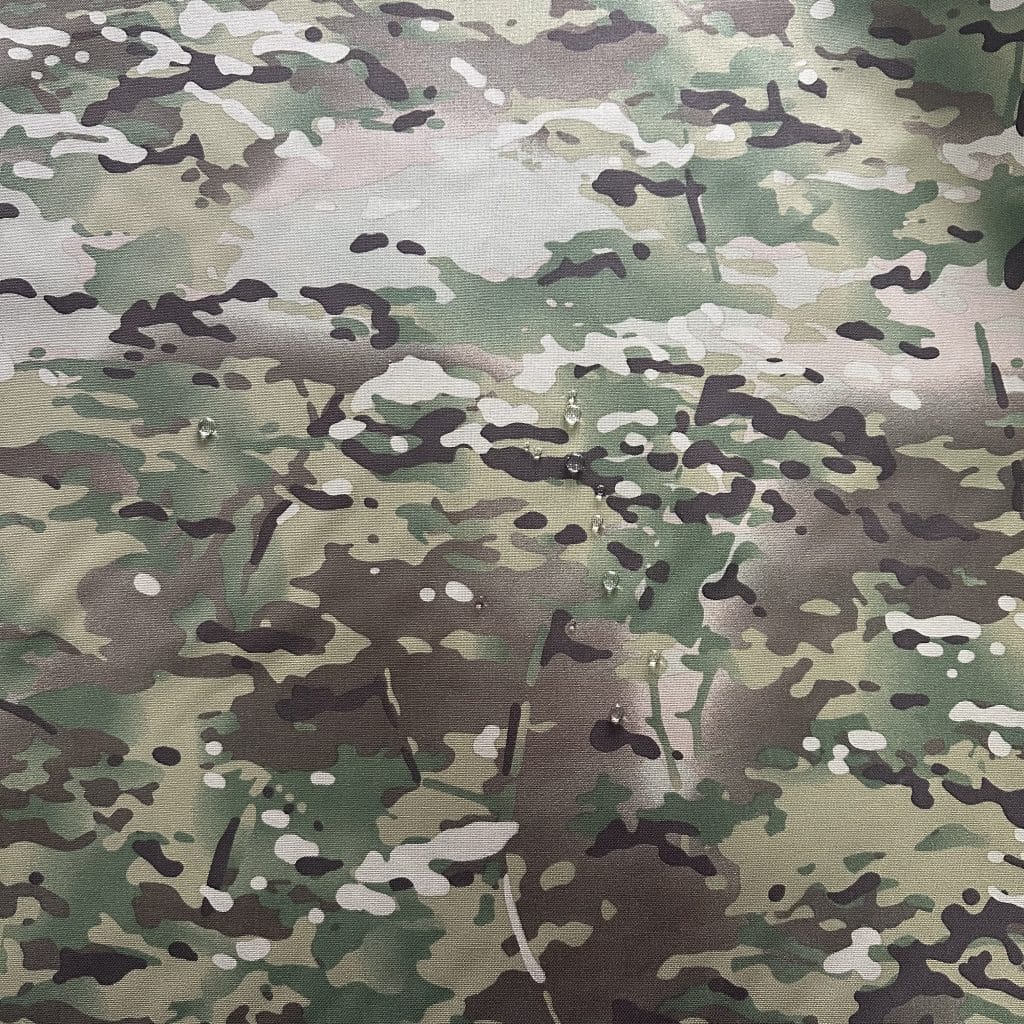
Waterproof IRR Multicam Nylon Fabric for Military Bags & Covers—How to Specify It Correctly
If you’ve ever had a tactical fabric order go “almost right,” you know the pain: the color is close but not perfect, the coating is strong but slightly stiff, or the print looks fine but changes between batches. For Multicam-style tactical textiles—especially waterproof PU-coated IRR camouflage—the best results come from writing a clear purchase specification and controlling your approvals.
This guide will help you:
-
specify the correct construction and finish
-
avoid shade mismatch between lots
-
reduce coating-related failures
-
build a repeatable supply chain for tactical gear
We’ll use a practical reference product as an example throughout:
Nylon 1000D Cordura Fabric with Waterproof PU Coating – IRR Multicam Camouflage.
1) The correct way to describe the base fabric
Don’t write “1000D nylon” alone. That’s incomplete.
A complete base spec includes:
-
Material: 100% nylon
-
Yarn count: 1000D × 1000D
-
Density: 14×11
-
Weight: 340 gsm
-
Width: 150 cm
This full format prevents suppliers from quoting “nearby constructions” that feel similar but perform differently.
2) Define the finish: waterproof PU coating + IRR Multicam
Your finish specification should contain:
-
Coating type: PU coating
-
Performance goal: waterproof function (define by your target)
-
Pattern: Multicam-style camouflage print
-
IRR requirement: define by your test standard
The reference finishing is stated as waterproof PU coating, IRR Multicam camouflage.
3) Don’t guess performance—use TDS benchmarks
A reliable supplier should provide a TDS that includes durability indicators.
Reference benchmarks from the example:
-
Tensile strength: warp 2400 N, weft 1700 N
-
Abrasion resistance: >100,000 cycles
-
Rubbing fastness: dry 3–4, wet 3–4
-
Washing fastness: 3–4
-
Washing size change: 2%
-
Spray test: 4
Even if your internal standard differs, having these values gives you a baseline for comparison and negotiation.
4) IRR + print + coating: the “triangle” you must manage
Why do IRR Multicam fabrics fail sourcing expectations?
Because you’re managing three systems at once:
-
Color/print system (pattern + shade + clarity)
-
IRR behavior (needs controlled pigment/finishing approach)
-
Coating system (PU thickness + adhesion + flexibility)
A good workflow is:
-
approve the print strike-off (visual)
-
confirm IRR performance by your test standard
-
confirm coating behavior by flex/adhesion testing
-
lock the standard for reorders
5) Suggested sampling and approval workflow
For tactical gear brands, a simple workflow reduces risk:
Step A: initial sample (A4 or meter sample)
Confirm handfeel, thickness, print clarity.
Step B: strike-off + lab dip confirmation
Lock the color standard for bulk.
Step C: performance confirmation
Abrasion, tensile, and rubbing fastness verification.
Step D: pilot cutting
Cut a small batch of panels to confirm cutting + sewing.
The product page also highlights a free sample offer and the ability to receive detailed TDS documents, which is exactly what you should leverage before placing bulk orders. LEAN TEXTILE CO., LIMITED
6) Where this fabric fits best (and where it may not)
This type of fabric is ideal for:
-
tactical backpacks and pouches
-
covers and equipment protection
-
load-bearing applications
-
vests/gear panels
The reference usage includes military bags, bulletproof vests, covers.
Where it may not be ideal:
-
ultralight backpacking products
-
apparel requiring high breathability (coated fabrics can feel less breathable)
7) Production planning: realistic timing
For professional purchasing, lead time matters. This product lists 10–15 days production time after sample confirmation. LEAN TEXTILE CO., LIMITED
Use this to plan:
-
sampling time
-
approval time
-
production scheduling
-
shipping deadline
8) Internal link placement tips for SEO
To maximize SEO value and conversion:
-
Place the product link once near the top
-
Place it once in the “spec template” section
-
Place it again in the CTA section
Example link text:
Nylon 1000D Cordura Fabric with Waterproof PU Coating – IRR Multicam Camouflage
FAQ
1) What’s the best way to order IRR Multicam fabric without risk?
Approve by sample/strike-off, confirm IRR performance to your standard, then lock the spec.
2) Is 340 gsm normal for 1000D tactical nylon?
It’s a common heavy-duty range for structured gear. The reference spec lists 340 gsm.
3) What PU coating issues should I watch for?
Delamination, cracking under flex, inconsistent coating thickness, and poor sewing compatibility.
4) How durable is this fabric for hard-use bags?
Reference abrasion is >100,000 cycles, indicating strong wear resistance.
5) What tensile strength should I expect?
Reference tensile: warp 2400 N, weft 1700 N.
6) What end uses are recommended?
Military bags, bulletproof vests, and covers are listed applications.
7) How wide is the fabric for cutting efficiency?
150 cm width is listed.
8) What’s the listed production time?
10–15 days after sample is confirmed.
Call to Action
If you need a repeatable supply of waterproof PU-coated IRR Multicam 1000D nylon for tactical bags, vests, or covers, start with a free sample and full TDS:
Nylon 1000D Cordura Fabric with Waterproof PU Coating – IRR Multicam Camouflage
Contact Us for a Detailed Offer:
Company: Lean Textile Co., Ltd.
Website: https://www.safety-lean.com
Email: [email protected]
WhatsApp / WeChat: 008615051486055