
Nylon 1000D for Tactical Backpacks & Plate Carriers—A Performance Checklist That Prevents Costly Returns
Tactical gear customers are tough judges. If a bag frays at the bottom corners, if a vest panel fades or rubs off, or if a cover leaks after field use, the return rate rises quickly. That’s why material choice matters—and why 1000D high-tenacity nylon with a durable coating remains a mainstream choice for high-wear equipment.
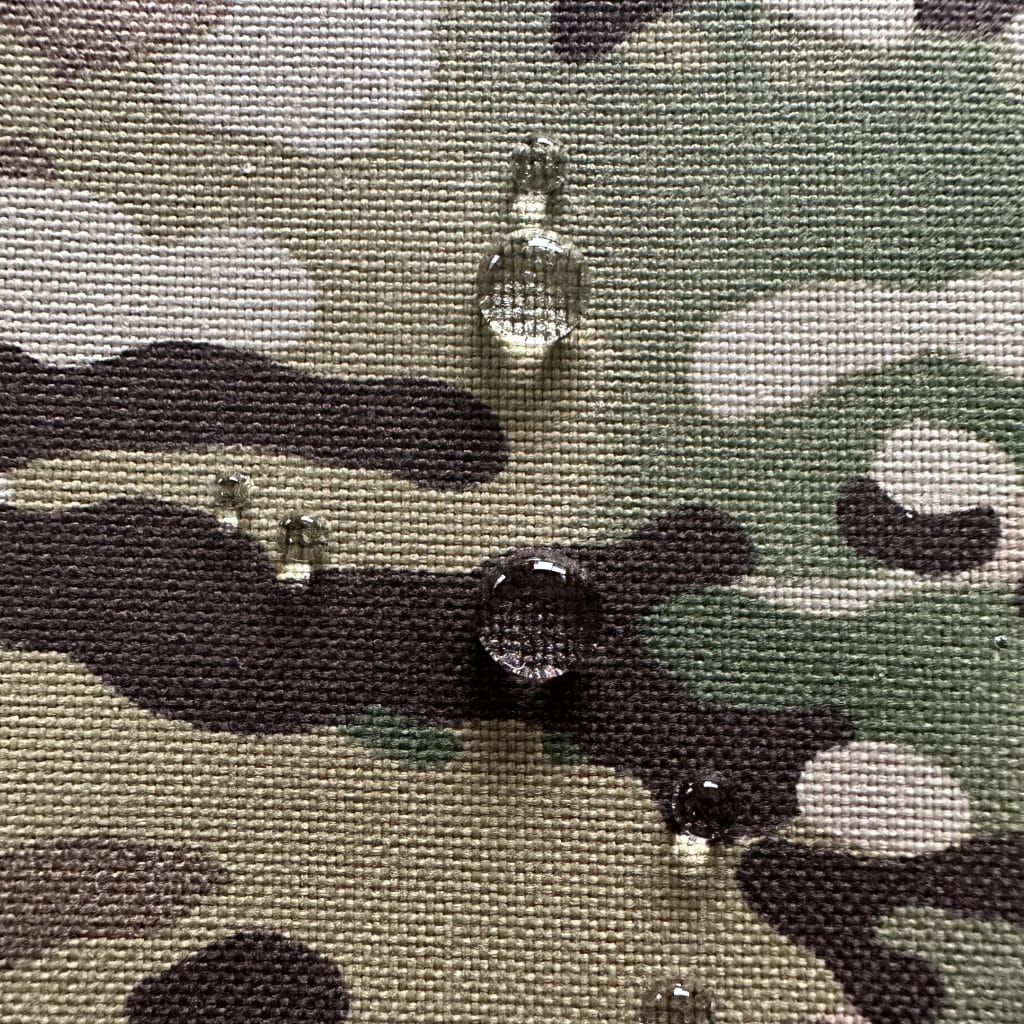
In this post, we’ll share a buyer-focused performance checklist you can use when sourcing 1000D nylon for tactical packs, pouches, and protective equipment. We’ll also reference a high-spec option with Multicam-style camouflage and IRR finishing so you can see what “good” looks like in a TDS:
Nylon 1000D Cordura Fabric with Waterproof PU Coating – IRR Multicam Camouflage.
1) Start with the base construction (don’t skip this)
Before anyone talks about “IRR,” “Multicam,” or “waterproof,” confirm the base fabric.
A solid 1000D base spec example:
-
Material: 100% nylon
-
Yarn: 1000D × 1000D
-
Density: 14×11
-
Weight: 340 gsm
-
Width: 150 cm
This matters because if the base is weak, finishing can’t fix it.
2) Tensile strength: your first durability indicator
Tensile strength helps predict how the fabric behaves under load—like shoulder strap anchor points, MOLLE stitching tension, or tight seams under weight.
The reference TDS lists:
-
Warp tensile: 2400 N
-
Weft tensile: 1700 N
For procurement teams, tensile is a “go/no-go” screen before moving to abrasion testing.
3) Abrasion resistance: where hard-use gear lives or dies
If you sell tactical packs, your worst enemy is abrasive contact:
-
concrete and asphalt
-
vehicle floors
-
sand and grit
-
repeated rubbing at corners and edges
That’s why abrasion cycle performance matters. The example TDS lists >100,000 cycles abrasion resistance.
In practical terms, higher abrasion resistance helps:
-
reduce early pilling/fraying
-
maintain the printed look longer
-
extend service life
4) Coating: waterproof performance + structural stability
A waterproof PU coating is often used on tactical nylon because it:
-
improves water resistance
-
reduces water absorption
-
adds stiffness/body to keep shape
-
helps with dirt resistance
The product finishing is listed as waterproof PU coating + IRR Multicam camouflage.
What to confirm by sample:
-
coating adhesion (no peeling)
-
folding performance
-
sewing compatibility (needle holes / seam reinforcement)
Even if your fabric never tears, customers complain when the product looks old quickly. That’s where color fastness tests help.
The reference TDS provides:
-
Rubbing fastness dry: 3–4
-
Rubbing fastness wet: 3–4
-
Washing fastness: 3–4
If your gear gets handled with sweaty hands or wet environments, wet rubbing matters more than most buyers assume.
6) Dimensional stability: why bag panels suddenly don’t match
The TDS also lists washing size change 2%.
Even if most tactical gear isn’t machine-washed frequently, this still signals stability and helps prevent panel mismatch during manufacturing and testing.
7) Spray test: what it tells you (and what it doesn’t)
The TDS lists spray test: 4.
Spray tests can indicate water repellency behavior, but for coated fabrics, you should still focus on coating integrity and hydrostatic performance targets if those are part of your standard.
8) Typical applications and why they match this fabric
A realistic usage list tells you whether the fabric is built for your product category. This product lists applications including military bags, bulletproof vests, and covers.
Those are exactly the categories where abrasion + tensile + stable camouflage are important.
9) Procurement tip: build a 3-tier fabric strategy
Instead of “one fabric for everything,” gear brands often scale better with 3 tiers:
-
Tier A (premium): high abrasion, IRR + stable print, stronger coating
-
Tier B (core): high durability, standard camouflage print, waterproof coating
-
Tier C (entry): cost-focused, simplified finish, limited color set
Your best-selling items usually sit in Tier B, while flagship products use Tier A.
10) Internal link recommendation (good for SEO + conversion)
When you publish this post, add a contextual internal link like this:
For a proven reference spec and free sample request, see:
Nylon 1000D Cordura Fabric with Waterproof PU Coating – IRR Multicam Camouflage.
FAQ
1) Is 1000D nylon too heavy for everyday backpacks?
For casual daily packs it can be heavy, but for tactical and hard-use gear it’s widely used.
2) What’s the most important test for tactical bag fabric?
Abrasion resistance is often the biggest predictor of real-world durability.
3) How does PU coating affect sewing?
It can increase stiffness and needle resistance. Confirm by sample and adjust needle/thread if needed.
4) Does Multicam print affect durability?
Print and finishing can influence rubbing fastness. Confirm rubbing fastness and surface resistance.
5) What abrasion level does the reference fabric provide?
The listed abrasion resistance is >100,000 cycles.
6) What tensile strength does a high-spec 1000D nylon show?
Reference TDS: warp 2400 N, weft 1700 N.
7) What are typical end uses?
Military bags, bulletproof vests, and covers are listed uses.
8) How fast is production after sample confirmation?
10–15 days is listed (depending on order and confirmation).
Want to reduce returns and complaints on tactical gear? Start with the material. Request a free sample and full TDS here:
Nylon 1000D Cordura Fabric with Waterproof PU Coating – IRR Multicam Camouflage
Contact Us for a Detailed Offer:
Company: Lean Textile Co., Ltd.
Website: https://www.safety-lean.com/
Email: [email protected]
WhatsApp / WeChat: 008615051486055