
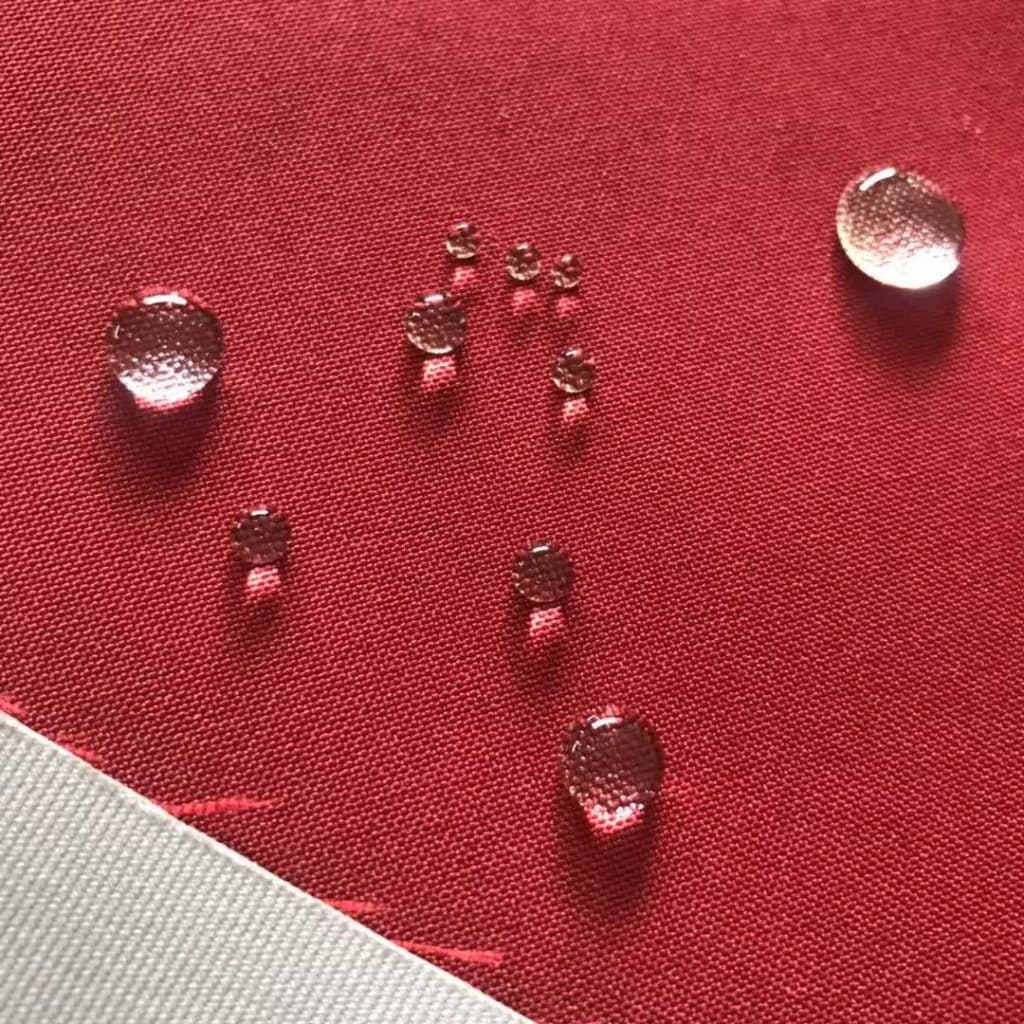
Buying hardshell fabric for PPE (Personal Protective Equipment) is not just “pick a waterproof roll and start sewing.” Most failures happen after production—leaking seams, clammy wear, delamination after washing, or a standard claim that cannot be supported by test reports.
This article gives you a copy/paste specification checklist that procurement teams, brand owners, and garment factories can use to lock down:
-
Waterproofness (WP / hydrostatic pressure)
-
Breathability (RET)
-
Seam taping compatibility & process window
-
Test methods + QC plan
1) Scope First: Are You Buying “Fabric Data” or “Garment Performance”?
Before you talk numbers, confirm the scope in writing:
Fabric-level targets (material test)
Used for purchasing control and supplier comparison. Typical items: WP, RET, tensile/tear, abrasion, dimensional change, etc. EN 343 also lists multiple mechanical tests and seam strength as part of performance assessment.
Garment-level targets (finished jacket/pants test)
This depends on pattern design + seam sealing + closures + workmanship. EN 343 explicitly includes tests on parts with seams and even mentions an optional garment test (rain tower / cloudburst-type evaluation).
Buyer rule: If your customer cares about EN 343 labeling/class, your RFQ should clearly state whether the target is fabric test only, garment test, or both.
2) Waterproofness (WP): Specify the Right Unit, the Right Test, and the Right Pretreatment
2.1 Use “WP (Pa)” or “Hydrostatic Head (mmH₂O)”—but don’t mix them loosely
-
EN 343 expresses WP in pascals (Pa) and even provides a conversion note: 1,000 Pa ≈ 102 mmH₂O.
-
Many factories and buyers still quote “10,000 mm” or “20,000 mm” (mm water column). That’s fine—just define the method and keep conversions consistent in the contract.
Quick conversion (approx.)
-
10,000 mmH₂O ≈ 98,000 Pa
-
20,000 mmH₂O ≈ 196,000 Pa
2.2 Define the test method
For EN 343-related procurement, hydrostatic pressure testing is referenced via EN 20811 (hydrostatic pressure test).
2.3 Define pretreatment (this is where many disputes begin)
A fabric can test strong when new, but performance may drop after abrasion/flexing/contamination/washing. EN 343 performance levels above the basic level involve additional pretreatments to simulate real use (movement, laundering, and contamination).
3) Breathability (RET): Lock Down the Metric Buyers Actually Compare
3.1 RET is a resistance value (lower = better)
RET is defined in EN 343 by referencing EN ISO 11092 (sweating guarded-hotplate method). Iteh Standards+2Satra+2
A simple way to communicate to non-technical buyers:
-
Lower RET → easier moisture vapor escape → less clammy feeling
3.2 Use EN 343-friendly class thresholds when relevant
If your PPE is sold with EN 343 positioning, the commonly used breathability classes are:
-
Class 1: RET > 40
-
Class 2: 25 < RET ≤ 40
-
Class 3: 15 < RET ≤ 25
-
Class 4: RET ≤ 15
4) Seam Taping Checklist: “Waterproof Fabric” Can Still Leak Without This
Even when fabric WP is excellent, the garment can fail from: needle holes, seam geometry, tape mismatch, and unstable process settings.
4.1 Seam tape compatibility (must be confirmed before bulk)
Ask your supplier to confirm:
-
Tape type recommendation (PU/TPU-based tape, 2-layer vs 3-layer compatible)
-
Adhesive compatibility with your membrane/backer
-
Recommended machine settings window (temperature / pressure / speed)
-
Tape width recommendation for your seam allowance
4.2 Seam design & construction (factory must follow)
Include in your tech pack:
-
Seam allowance (e.g., 10–12 mm)
-
Stitch density (avoid “needle perforation lines” too dense)
-
Critical seam list (shoulder, hood, crotch, zipper area)
-
Closure waterproofing plan (storm flap / waterproof zipper / bartack placement)
4.3 Seam sealing QC (simple checks that prevent claims)
-
Visual inspection: tape edge lift, bubbling, wrinkles
-
Peel check (internal QC): tape adhesion uniformity
-
Leak check on critical seams (sample garments)
5) The Complete Hardshell Fabric Specification Checklist (Copy/Paste)
A) End Use
-
Industry: construction / utilities / emergency services / agriculture / logistics / etc.
-
Climate: cold rain / warm rain / wind exposure
-
Work intensity: low / medium / high sweating
-
Expected service life: ___ months, ___ wash cycles
-
Any add-ons: hi-vis, FR, anti-static, IRR, chemical splash (spec separately)
B) Laminate Construction (Hardshell Build)
-
Structure: 2L / 2.5L / 3L
-
Face fabric: polyester / nylon, weave (plain/ripstop), denier, GSM
-
Membrane: PU / TPU / ePTFE / other (if specified)
-
Backer / protective layer: tricot knit / dot print / other
-
DWR requirement: yes/no, after-wash requirement (e.g., still passes spray rating after X washes)
C) Waterproofness (WP)
-
Target WP: ______ Pa (or ______ mmH₂O)
-
Test method: EN 20811 (hydrostatic pressure) or equivalent
-
Pretreatment requirement: as-new + after agreed pretreatments
-
Pass/Fail rule: no lower than target, no abnormal leakage
D) Breathability (RET)
-
Target RET: ______ m²·Pa/W
-
Test method: EN ISO 11092
-
Target class (if EN 343 positioning): Class __ (optional)
E) Mechanical & Durability (choose what matters)
-
Abrasion resistance (Martindale cycles target)
-
Tensile strength / tear strength targets
-
Flex resistance (especially for coated/laminated fabrics)
-
Dimensional change after washing
-
Hydrolysis resistance requirement (if relevant)
F) Seam Taping (Garment-Making Compatibility)
-
Recommended seam tape: ______ (supplier to specify)
-
Tape width: ______ mm
-
Sealing settings window: temperature ___°C / pressure ___ / speed ___
-
Seam design requirements: seam allowance ___ mm; stitch density guideline
-
QC checks: tape adhesion, edge lift, bubbling, leak test samples
G) Documentation Required With Each Lot
-
Fabric test report(s): WP, RET, key mechanical tests
-
Lot traceability: roll numbers, dye lot, production date
-
Care label recommendation (washing & re-proofing suggestions)
6) Sampling & QC Plan (Buyer-Friendly, Factory-Friendly)
A practical plan that works for most PPE sourcing:
-
Pre-production sample (PPS): confirm handfeel + lamination + color + test baseline
-
Pilot seam sealing trial: confirm tape compatibility + stable settings
-
Bulk inline QC: check lamination defects, face wet-out issues, coating uniformity
-
Final random inspection: verify key metrics and appearance before shipment
If you want your blog to convert better, add a sentence like:
“Send us your target WP/RET and we’ll recommend the most stable laminate construction and seam tape solution for your factory line.”
7) FAQ
1) What is WP in hardshell fabric?
WP is “resistance to water penetration,” commonly measured by hydrostatic pressure. Higher WP generally means better rain resistance.
2) Is 10,000 mm waterproof enough for PPE rainwear?
It can be enough for many applications, but you must also consider seams, pretreatments, and pressure points (kneeling/sitting/shoulder straps).
3) What does RET mean and why do buyers prefer it?
RET is a resistance metric: lower RET = better moisture vapor transfer, which usually feels less clammy during work.
4) Can a fabric be waterproof but not breathable?
Yes. Some waterproof materials block vapor strongly. That’s why WP and RET should be specified together.
5) Why do waterproof garments leak even with high WP fabric?
Most leaks come from seams, needle holes, closures, and incorrect seam tape settings—not from the flat fabric.
6) Do I need 3-layer hardshell for PPE?
Not always. 2.5L can work for lighter duty or packable gear; 3L is often chosen when durability and wash stability matter more.
7) Should I specify EN 343 in the fabric RFQ?
You can reference EN 343 targets, but remember EN 343 performance is often tied to garment construction as well as material tests.
8) How can I reduce delamination claims?
Control lamination quality, define washing/pretreatment expectations, avoid incompatible seam tape, and confirm a stable sealing process window before bulk production.
8) Call to Action (High Conversion)
If you want fewer returns and smoother approvals, send us your target WP (Pa/mmH₂O), RET, end-use, and wash requirements. We can recommend a stable hardshell laminate construction and confirm seam tape compatibility before bulk.